Teaching Scripture Without Losing the People in the Room

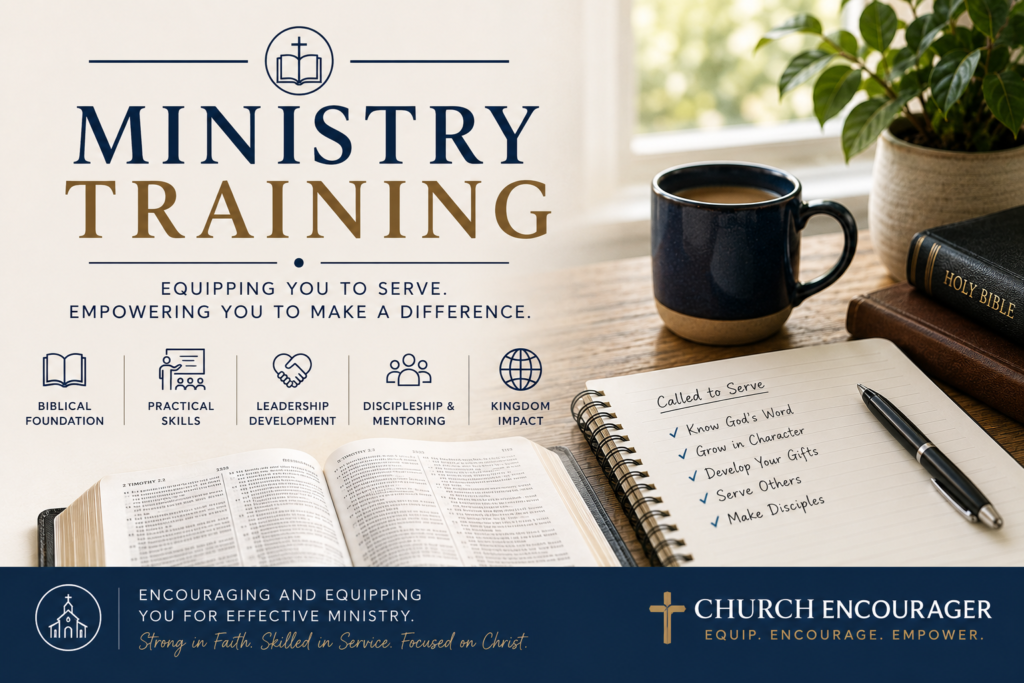
Faithful Bible teaching requires two kinds of attention at the same time: attention to the biblical text and attention to the people who are listening. We want to handle Scripture accurately, but we also want people to understand what we are saying and recognize how God’s truth connects with faithful life and ministry.
Start With the Text, Not With the Talk
One of the easiest mistakes in teaching is beginning with what we want to say and then searching for a Bible verse to support it.
A better approach begins with Scripture.
Read the passage repeatedly. Read what comes before and after it. Ask what the author is doing. Look for repeated words, contrasts, commands, promises, questions, and turning points.
Paul’s instruction to Timothy was to handle the word of truth accurately (2 Timothy 2:15).
Know What You Are Trying to Say
If someone asked you fifteen minutes after your lesson, “What was the main point?” what would you hope they remembered?
Try writing that idea in one sentence before building the rest of the lesson.
That simple discipline keeps us from burying the central truth beneath five unrelated observations.
This kind of clarity is particularly important for people developing as leaders. The Encourager Pathways are designed to help believers and leaders move from awareness toward faithful action in areas such as gifts, calling, formation, and leadership.
Don’t Make People Carry Your Entire Study Process
Teachers often discover fascinating information while preparing.
We learn Greek words, historical background, cultural details, theological connections, cross-references, and alternative interpretations.
That study matters.
But your listeners do not necessarily need every piece of it.
Study widely. Teach selectively.
Include what helps people understand the biblical text and its significance.
Explain Church Language
Churches regularly use words such as justification, sanctification, covenant, redemption, discipleship, Kingdom, and atonement.
Those are meaningful words, but we should not assume everyone understands them.
Clear teachers learn to explain theological ideas without making listeners feel unintelligent for not already knowing them.
Jesus often communicated profound Kingdom realities through ordinary images—seed, soil, bread, lamps, sheep, coins, vineyards, and family life.
Connect Truth With Actual Life
Application is more than adding three tasks at the end of a sermon.
Ask what the passage changes.
Does it invite people to trust God differently? Forgive someone? Receive grace? Reconsider an assumption? Practice generosity? Become more attentive? Wait? Repent? Serve?
The aim is not simply to produce busy Christians. It is to help people respond faithfully to God.
Remember Who Is in the Room
A congregation or ministry group usually contains people at very different places.
Some have followed Jesus for decades. Others are new believers. Some are skeptical. Some are grieving. Some are exhausted. Some know the Bible well; others barely know where Genesis is.
Good ministry communicates in ways that welcome people into the truth rather than demonstrating how much the teacher knows.
Let Your Life Support Your Teaching
Ezra 7:10 provides a helpful sequence: Ezra devoted himself to study God’s instruction, practice it, and teach it.
Study. Practice. Teach.
No teacher lives perfectly, but people should increasingly see some relationship between our message and our manner of life.
That is especially important in leadership because ministry influence flows through character as well as words.
Teaching Develops Through Practice and Feedback
You do not become a stronger communicator simply by reading books about communication.
Teach. Ask trusted people what was clear and what was confusing. Listen without becoming defensive. Try again.
The same principle applies to leadership generally: growth is helped by reflection, encouragement, and wise conversation. Church Consultant’s Kingdom Encouragers community and Request a Conversation pathway provide places for encouragement and discernment.
Those wanting more structured biblical and ministry study can also explore the free courses and programs available through the Online Bible Institute.
Clarity Is an Act of Service
The point of teaching Scripture is not to impress people with our preparation.
It is to serve them.
Study carefully. Explain simply. Keep Jesus central. Make room for questions. Connect truth with life. Remain teachable yourself.
When we do that faithfully, Bible teaching becomes more than the transfer of information. It becomes one way we encourage and equip people to follow Jesus.